
In the world of high-end watchmaking, Roger Dubuis has never been synonymous with “low-key”. It redefines the boundaries of modern fine watchmaking with its bold hollow structure, flamboyant star-shaped tourbillon and extreme hand-polishing. Among them, the manual winding tourbillon watch pushes the ritual sense of interaction between mechanical aesthetics and human watches to the pinnacle – but this “peak experience” also puts forward higher requirements for the wearer:Will you wind it correctly?
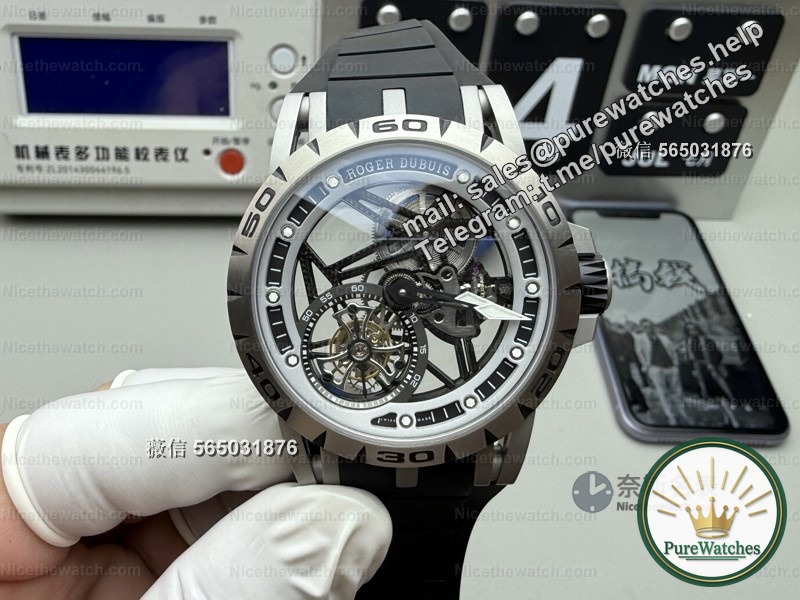
Many people think that manual winding means twisting the crown until it stops. As everyone knows, this kind of “violent winding” is the fastest way to destroy a precision tourbillon movement. Today, we will start from actual use and talk about the correct way to open the Roger Dubuis manual tourbillon and how to maintain this “mechanical art on the wrist” on a daily basis.
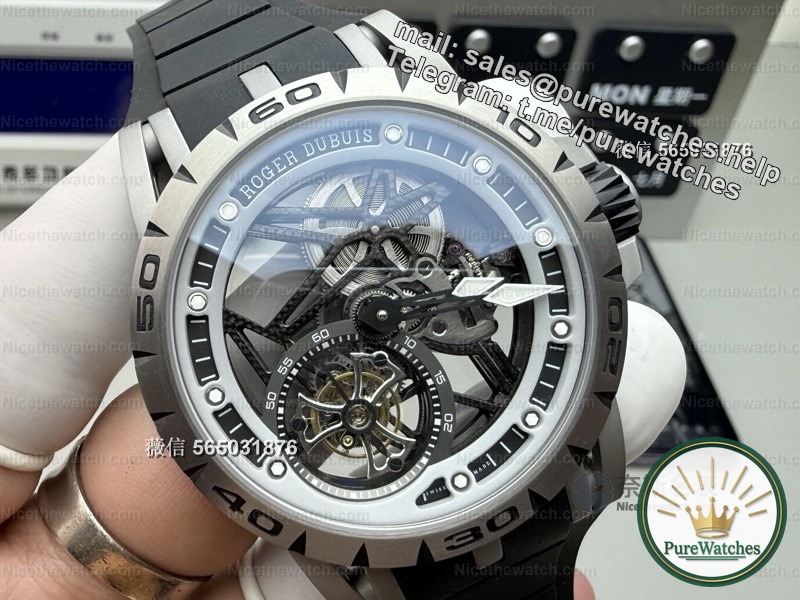
Why is a manual tourbillon worth slowing down?
Unlike self-winding watches, manual tourbillons do not have the interference of automatic tourbillons. The movement is thinner and the structure is more transparent. Roger Dubuis’s iconic five-pointed star tourbillon rotates slowly under the unobstructed viewing window, as if suspended in the air, interpreting the rhythm of the machine every second. And its power comes entirely from every turn of your fingertips – this is not a burden, but an exclusive sense of ritual: you breathe life into this precision instrument with your own hands.
But because of this, extreme caution must be exercised.

Winding is not “tightening”, but a fingertip conversation
First, slowness is the bottom line.
Rotating the crown quickly and violently will cause the spring to withstand a huge impact in an instant, which may accelerate gear wear or cause the spring hook to break. The correct approach is to gently hold the crown with your thumb and index finger and rotate it clockwise at a smooth and even speed, as if you are stroking an antique rather than tightening a screw.
Second, learn to “listen” to the movement.
When the mainspring is close to the full string, you will obviously feel the resistance increase, and the crown will feel a slight “rebound” or “slip” – this is the anti-return device built into the movement reminding you: “Enough!” At this time, you must stop immediately. Forcibly continuing to wind the bow is like stretching the bow to its limit and still pulling it, which can easily cause irreversible damage.
Many novices fail to master this point, causing the movement to “strike” early. In fact, truly advanced players rely on feel rather than brute force.

Daily maintenance: details determine lifespan
- Regular winding: Even if you don’t wear it often, it is recommended to wind the chain gently and fully at a fixed time every day to keep the lubricating oil active and prevent the movement from “sleeping” for too long.
- Take off the watch before operating it: Be sure to remove the watch when adjusting the time or winding to prevent the crown from being deformed or broken due to lateral force.
- Keep away from magnetic fields and vibrations: Mobile phones, stereos, and magnetic bags may interfere with the operation of the tourbillon, and violent collisions are even more taboo.
- keep clean: Wash your hands and dry them before winding to prevent sweat and dust from penetrating into the movement with the crown; just wipe the case with a soft cloth every day.

Written at the end: What you have is not only time, but also responsibility
The Roger Dubuis manual tourbillon has never been just a tool for telling time. It is a masterpiece of mechanical engineering, a fusion of art and technology, and a dialogue between the wearer and the watchmaker across time and space. Every slow and focused winding is a response to this ingenuity.

So, please don’t treat it like an ordinary watch. Use it with patience, gentleness and reverence, and it will reward you with its precision and beauty for decades.