
1969 was a year full of breakthroughs in human history. From the Apollo 11 moon landing to the first flight of the Boeing 747, technological leaps brought countless “firsts” to the world. This year was also of epoch-making significance for the watchmaking industry – the birth of the automatic chronograph completely changed the history of chronographs. Brands such as Zenith, TAG Heuer and Seiko have successively launched the world’s first automatic chronograph movements, marking a new era of mechanical watches moving from manual winding to automatic winding.
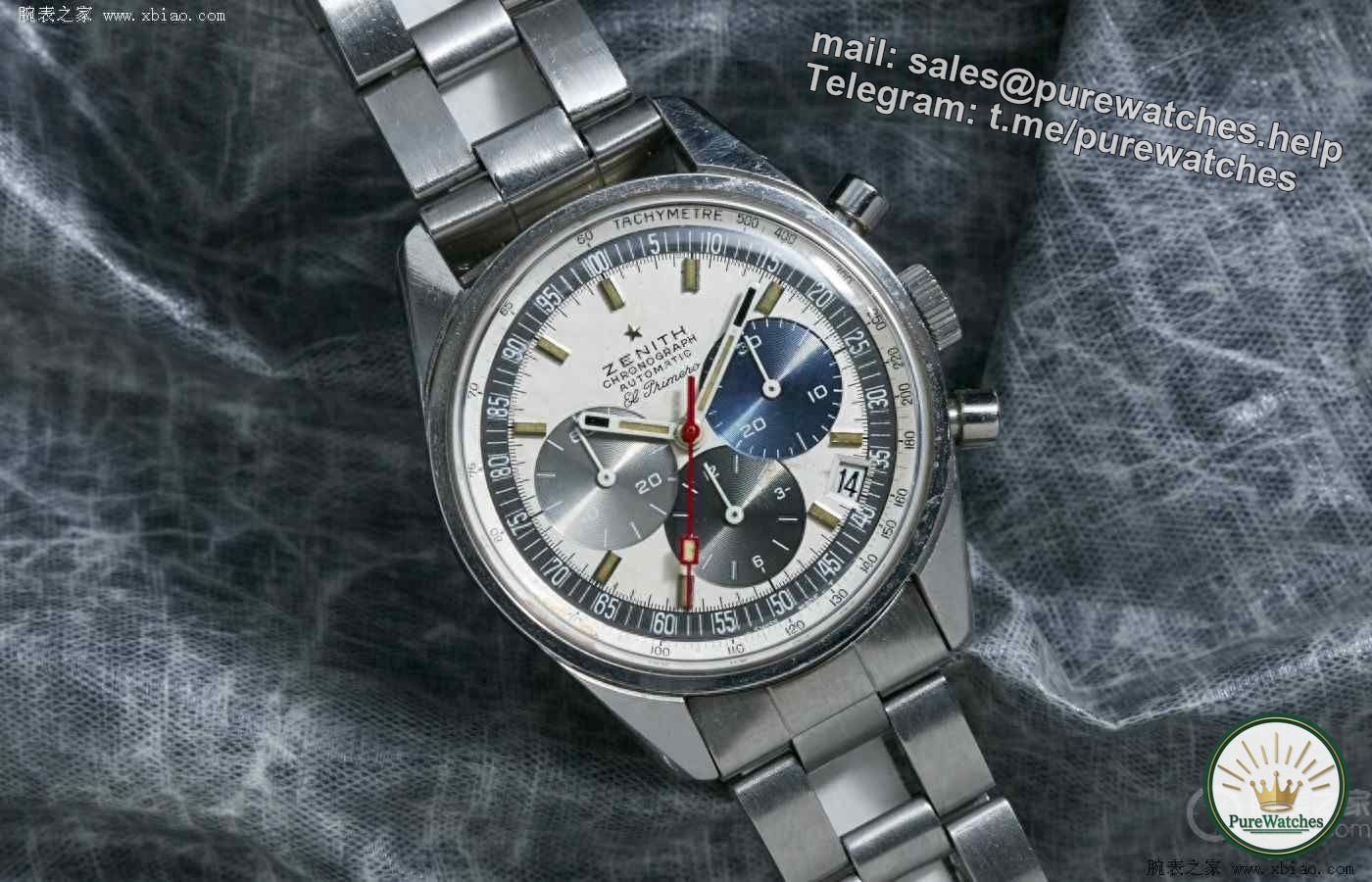
Zenith A386 Automatic Chronograph (1969)
Background and challenges of automatic timepieces
In the mid-20th century, the chronograph function, as one of the important complex functions of watches, has always relied on manual winding movements. However, how to integrate the automatic winding system into the chronograph movement is a huge technical problem. As early as the 1940s, Albert Piguet, the chief designer of Lemania, Switzerland, once said: “If you try to make an automatic chronograph, you may end up with double the thickness of the case.” It was not until more than 20 years later that this idea was realized with the advancement of mechanical manufacturing technology.
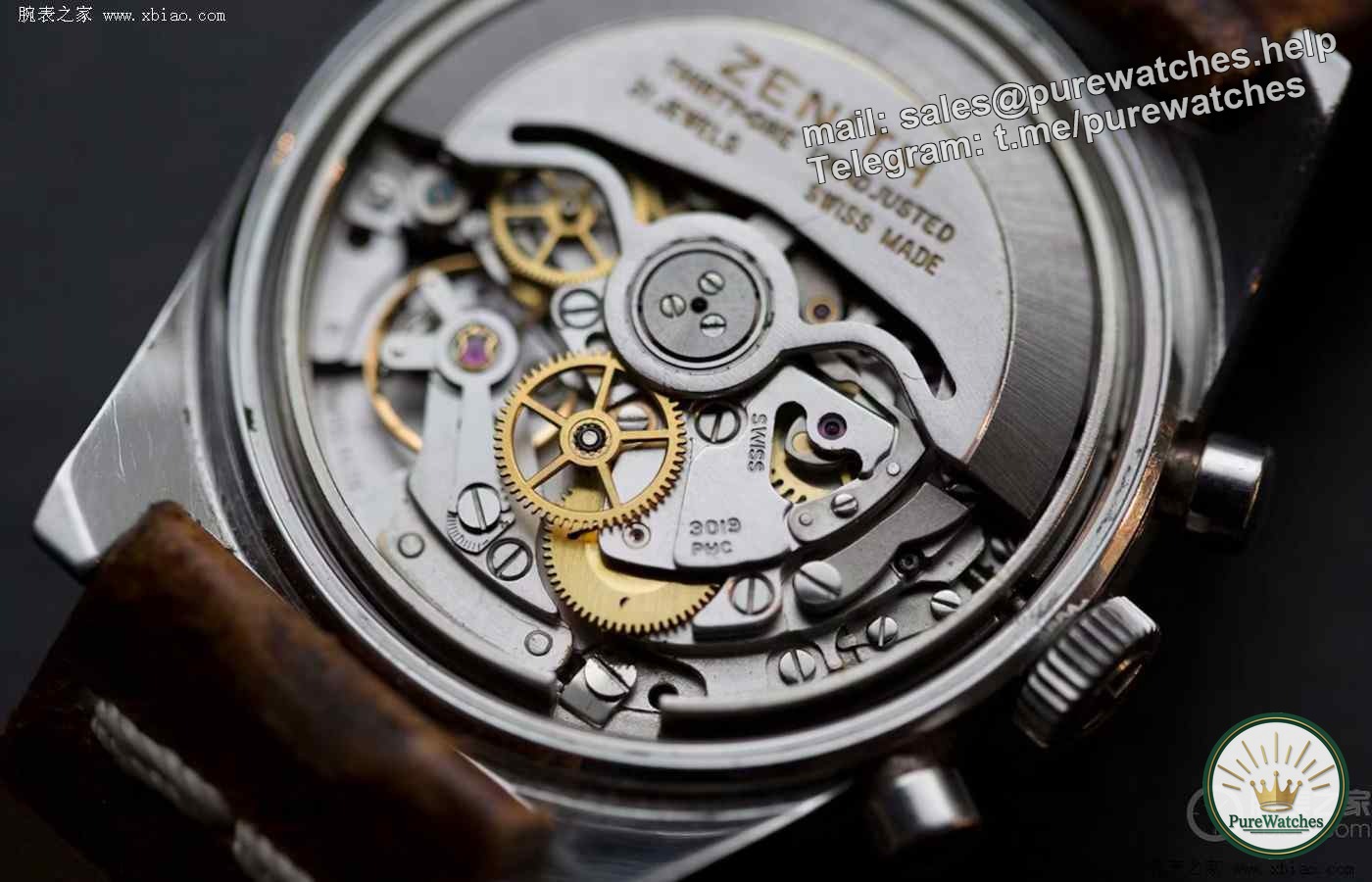
Zenith El Primero 3019 PHC movement
Zenith El Primero: The legend of high vibration frequency
In 1969, Zenith launched the El Primero movement, which was hailed as the “first” and its Spanish name also highlighted the brand’s ambitions. The original El Primero model 3019 PHC is only 30 mm in diameter and 6.5 mm thick. It adopts a column wheel structure and uses a tungsten carbide oscillating weight outer edge and molybdenum sulfate lubricant to improve performance. The most eye-catching thing is its high vibration frequency of 36,000 times per hour, which enables the timing accuracy to reach an astonishing 1/10 second, far exceeding competing products of the same period.
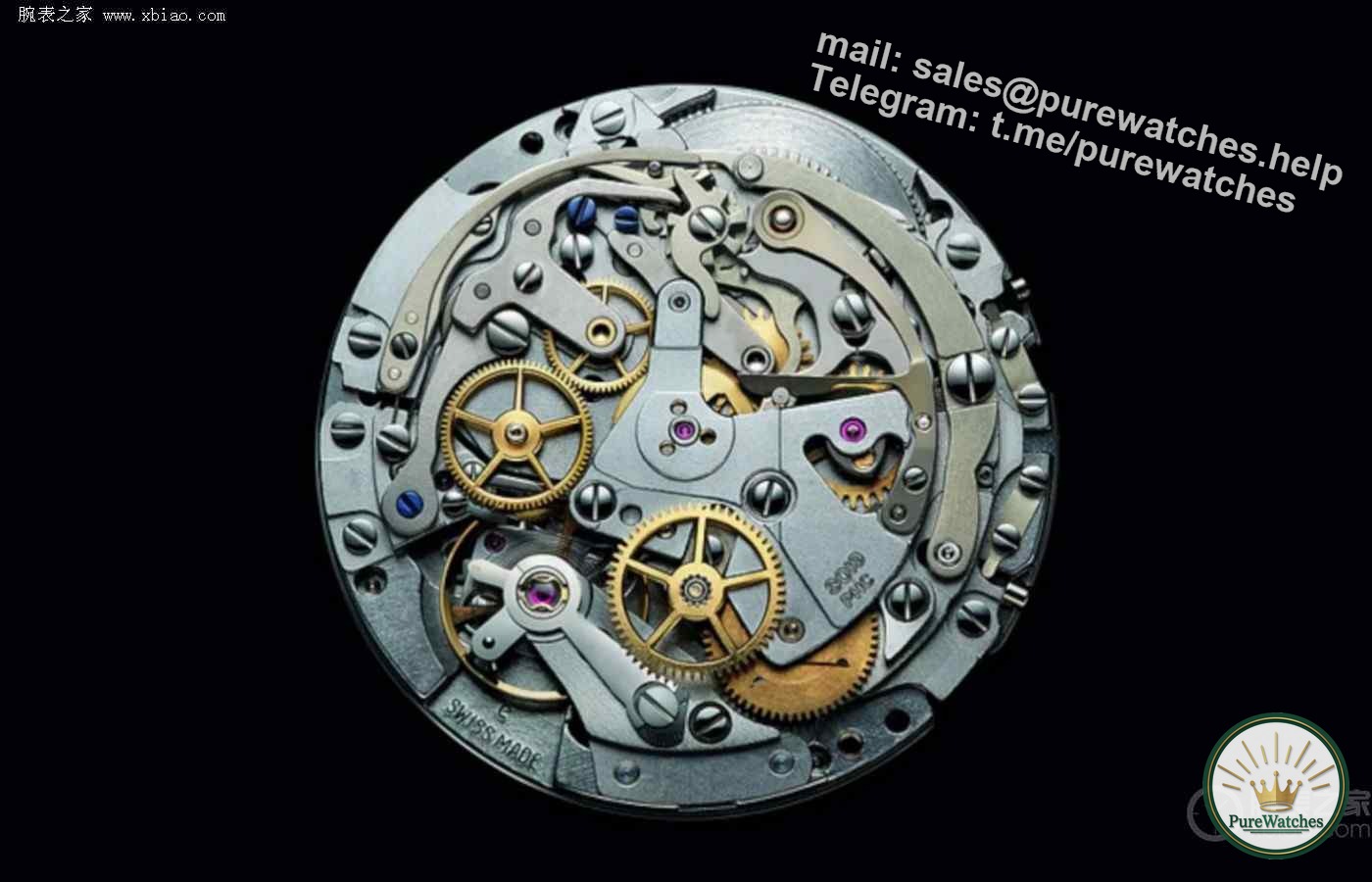
Zenith El Primero 3019 PHC movement (automatic rotor removed)
Based on the El Primero movement, Zenith has launched classic models such as A384, A385 and A386. A384 is famous for its “panda face” design; A385 uses a gradient smoked dial; A386 shows a unique aesthetic style through a three-color sub-dial and black scale ring. In recent years, Zenith has launched modern replica versions based on these historical models, continuing the classic charm.
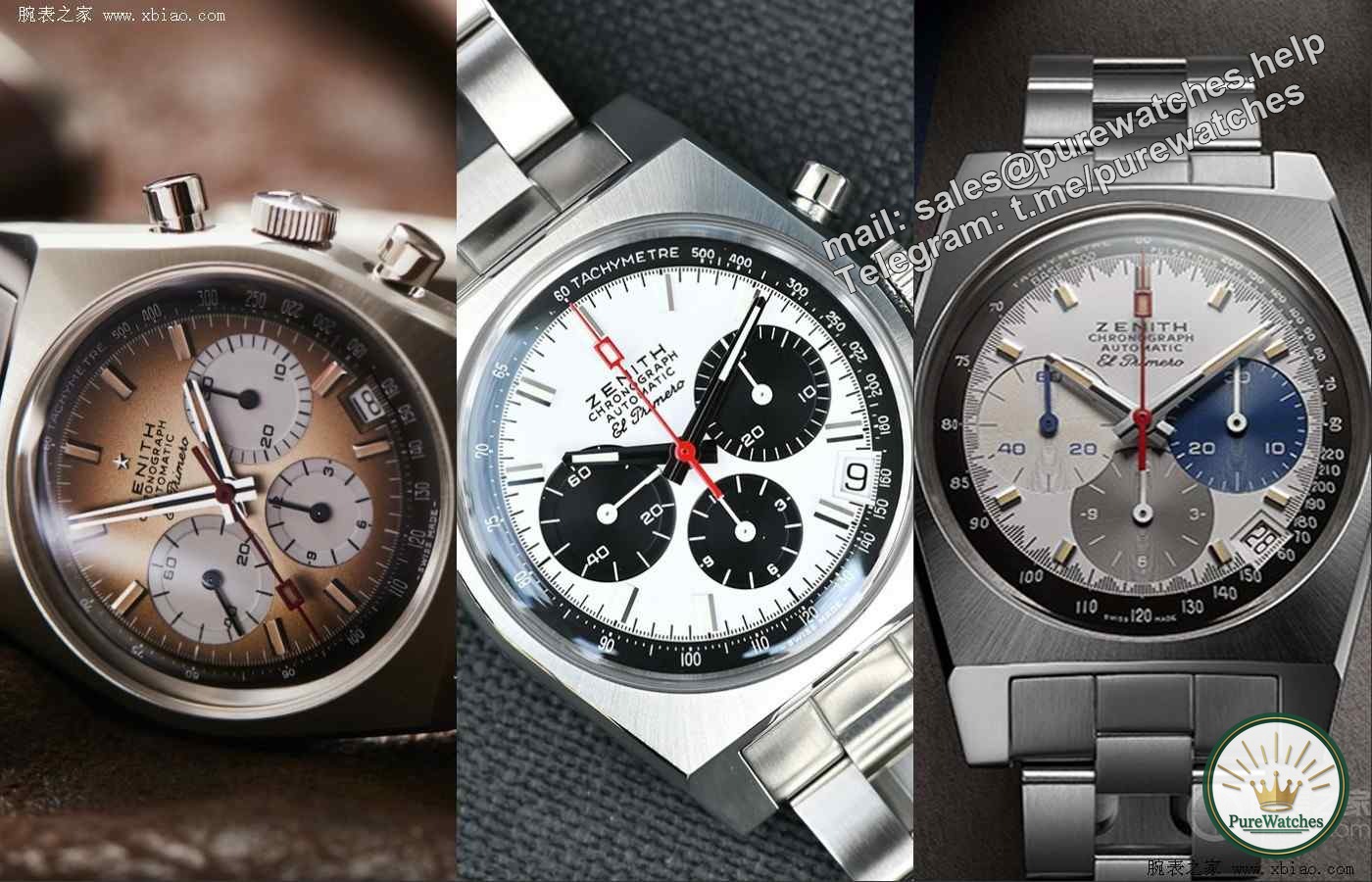
Zenith A384, A385, A386 modern replicas
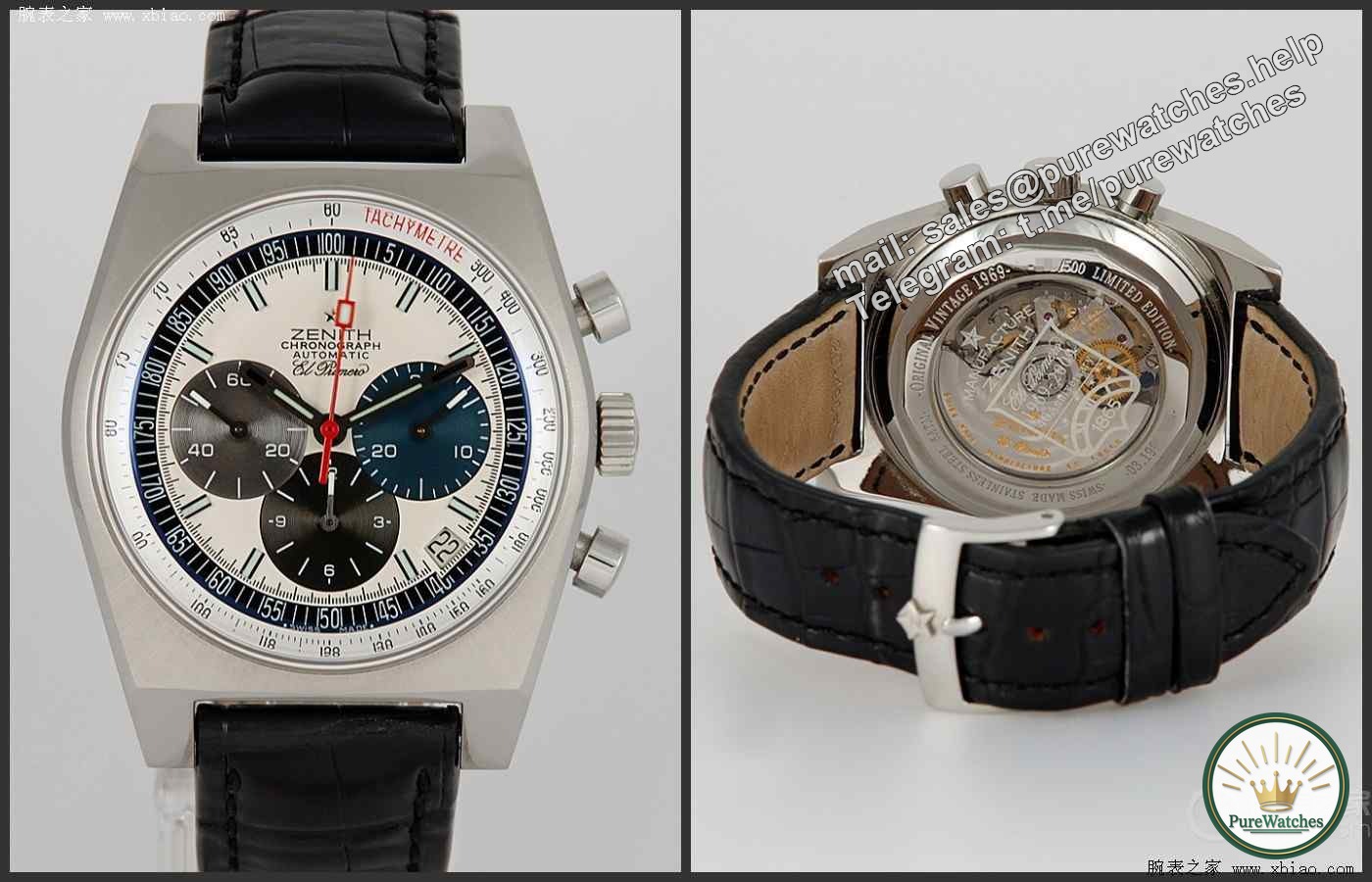
El Primero 40th Anniversary Limited Edition with El Primero 469 movement
Although it fell silent during the Quartz Crisis, the El Primero movement has not been forgotten. In 2009, on the occasion of the 40th anniversary of the movement, Zenith launched the El Primero 469 movement, which highly restored the original design and improved the polishing process. Today, the latest generation of El Primero 3600 movement not only adds a stop-second mechanism, but also extends the power reserve to 60 hours, becoming the benchmark for high-performance chronographs.
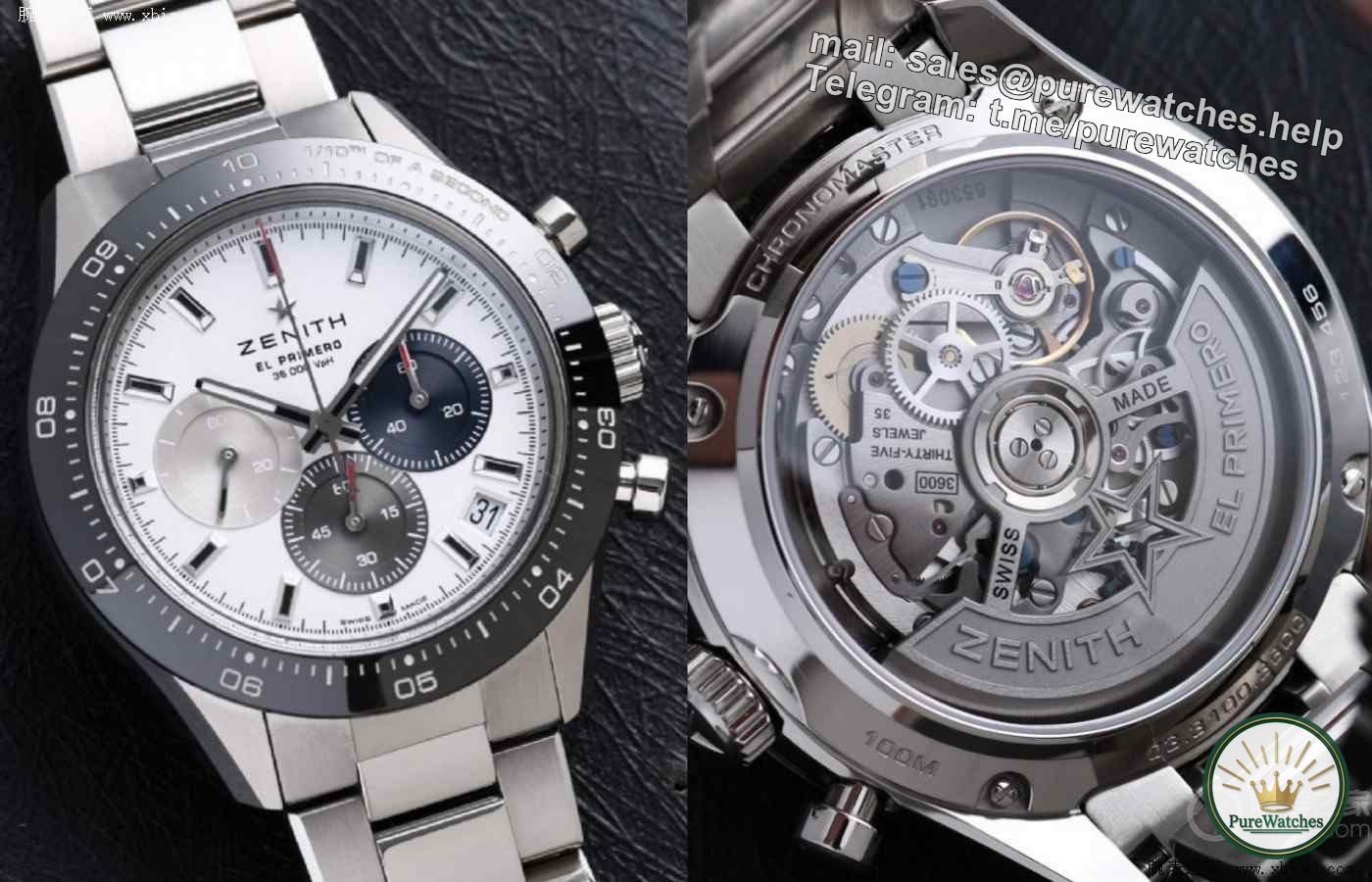
CHRONOMASTER SPORT watch with El Primero 3600 movement
TAG Heuer Caliber 11: the result of multiple collaborations
Another important automatic chronograph movement is Caliber 11, which was jointly developed by Tag Heuer, Breitling, Hamilton and Dubois-Dépraz, and the project code is “Project 99”. This movement is characterized by the design of the crown at 9 o’clock, which is designed to emphasize the convenience of not requiring manual winding. Caliber
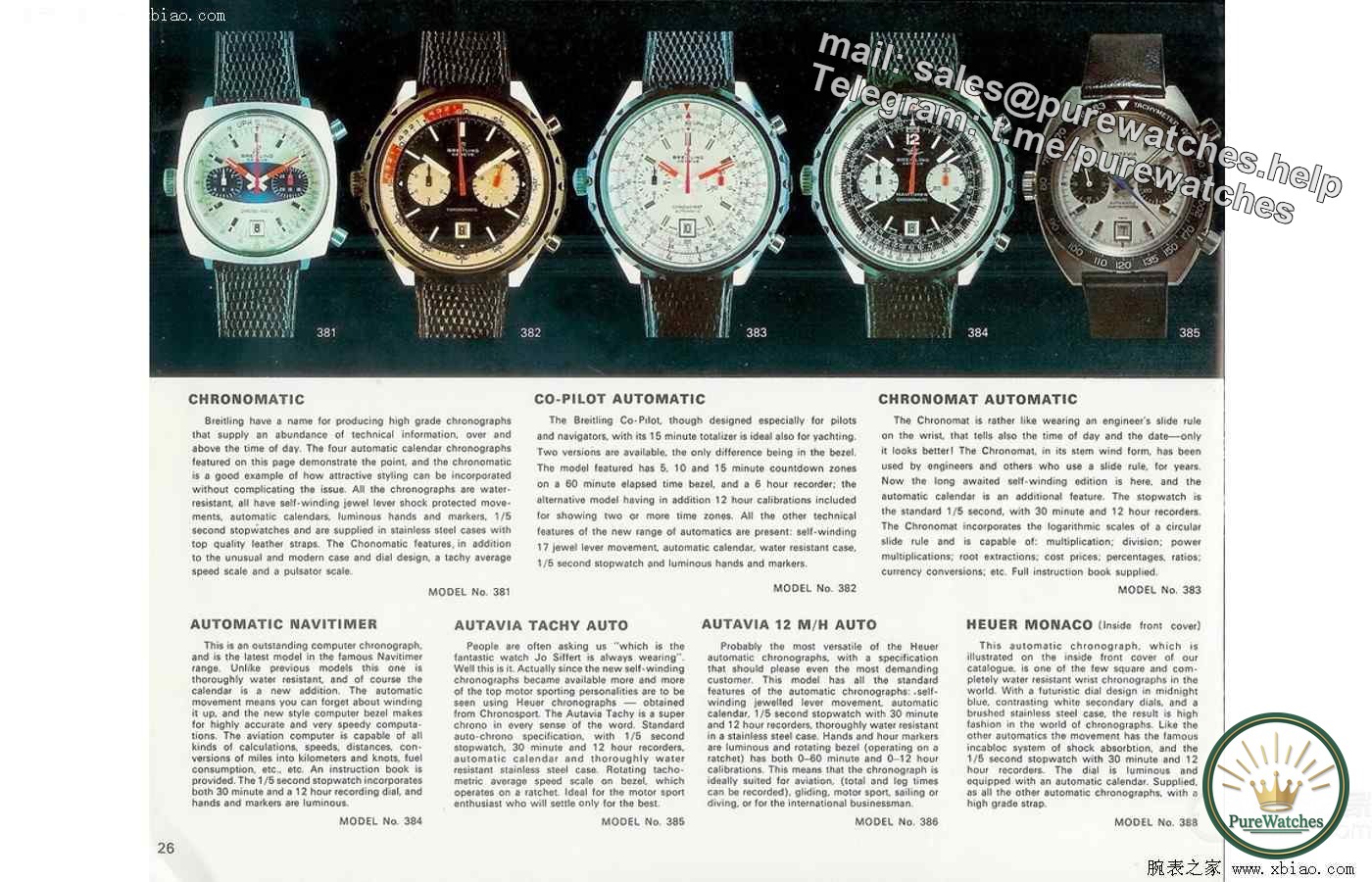
The first watches equipped with Caliber 11 movement
Watches equipped with Caliber 11 movement include TAG Heuer Carrera, Monaco and Autavia series, as well as Breitling Chrono-Matic series and Hamilton Fontainebleau series. However, the early Caliber 11 had some problems, such as excessive swing and easy wear of the gears. The subsequent improved version of Caliber 11-I solved these problems and derived Caliber
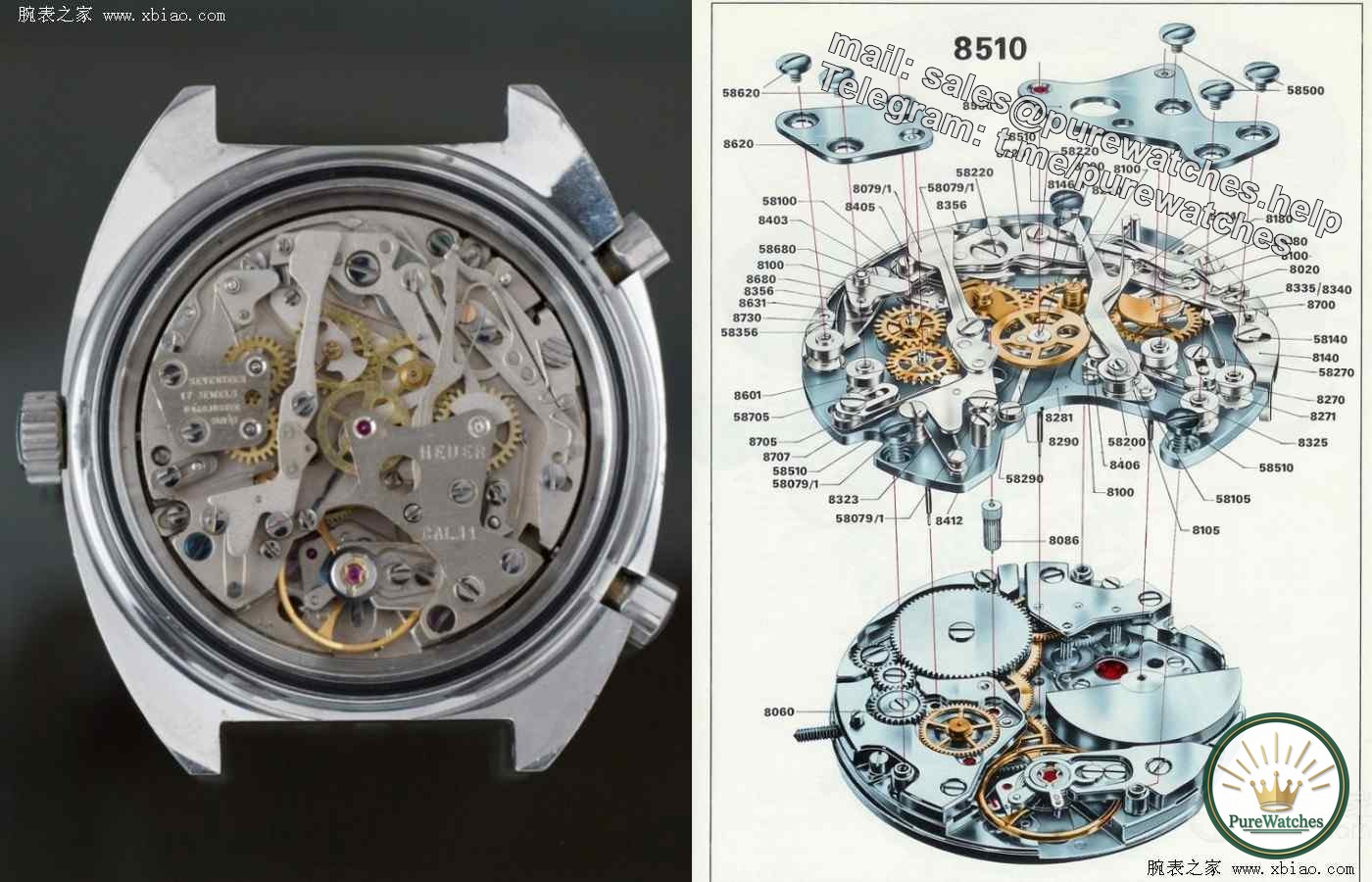
Caliber 11 movement and structure diagram used by Tag Heuer
Seiko 6139: The King of Cost-Effectiveness
Not to be outdone, Seiko from Japan launched its first automatic chronograph movement, Caliber 6139. This movement has a diameter of 27 mm, a vibration frequency of 21,600 times per hour, a column wheel and a vertical clutch structure, and is equipped with Seiko’s famous “magic lever” automatic winding system. The 6139 movement quickly won the favor of the market with its high cost performance, especially in the American market.
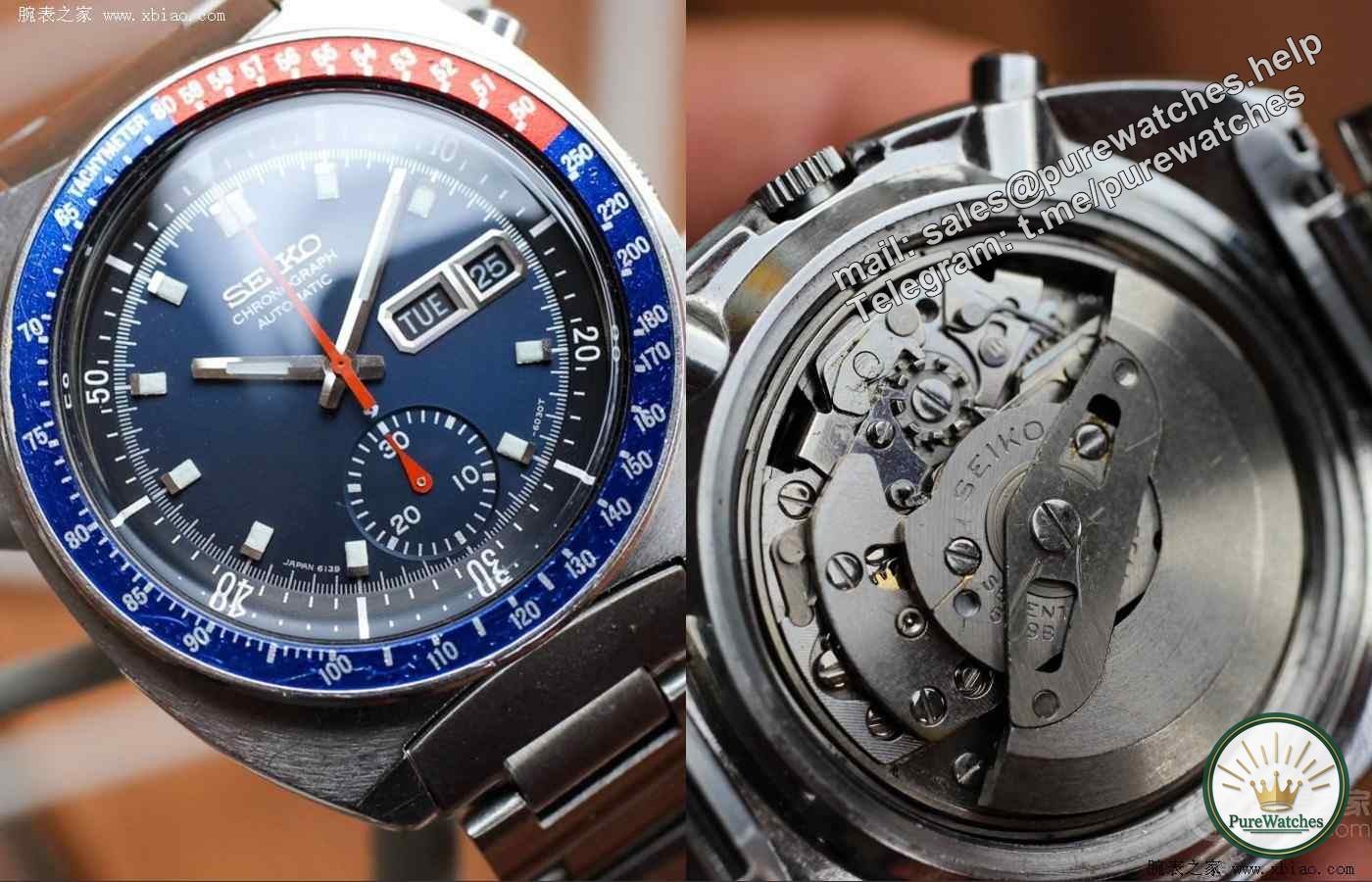
Seiko Poguer series watch and 6139 movement
The Seiko Speedtimer watch is the first watch equipped with the 6139 movement. It is designed with an abalone shell and offers a variety of color options. In 1973, American astronaut William Pogue wore a Speedtimer watch during the “Spacelab 4” mission, making it one of the first automatic chronographs to enter space.
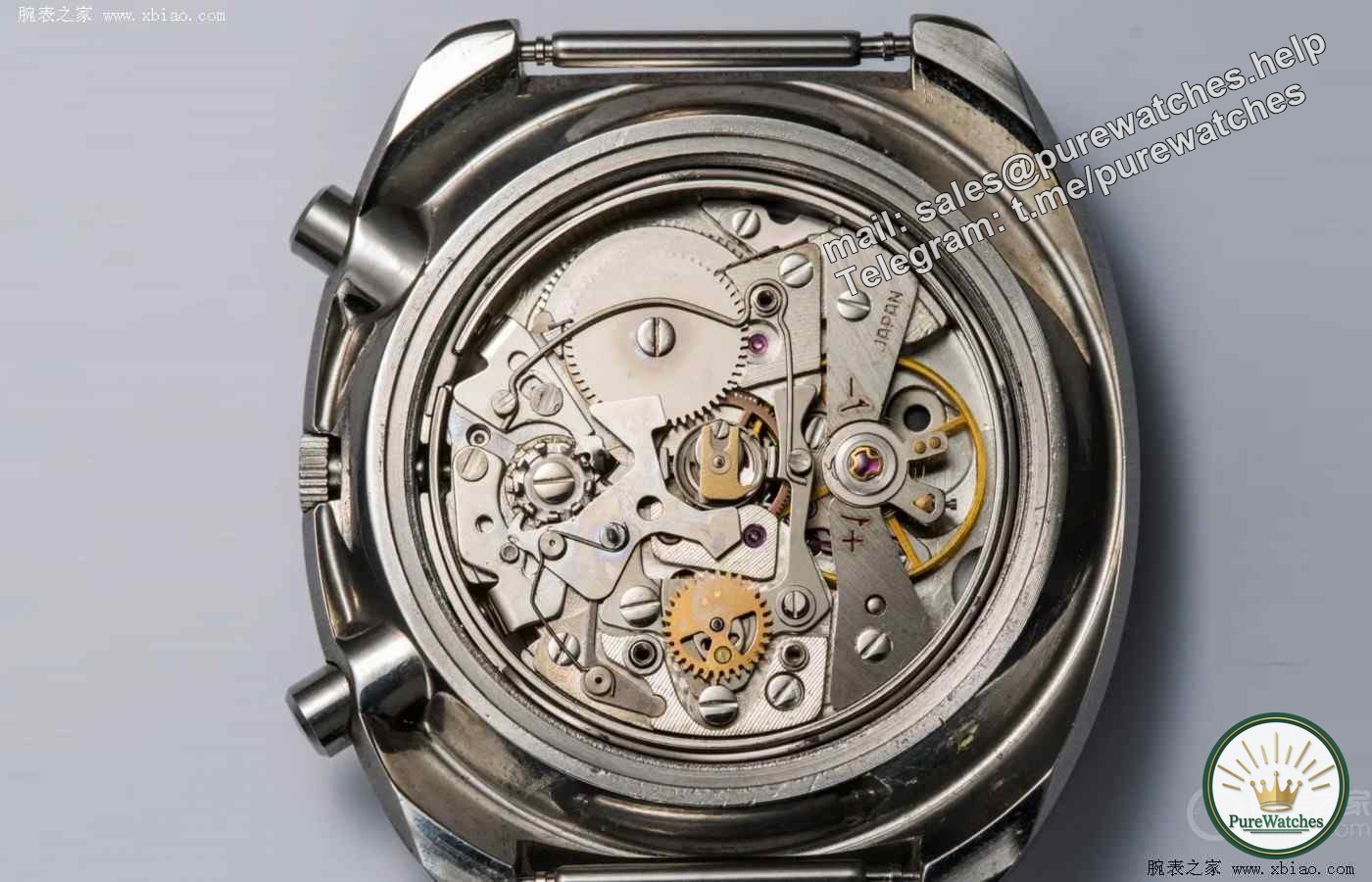
Seiko caliber 6139
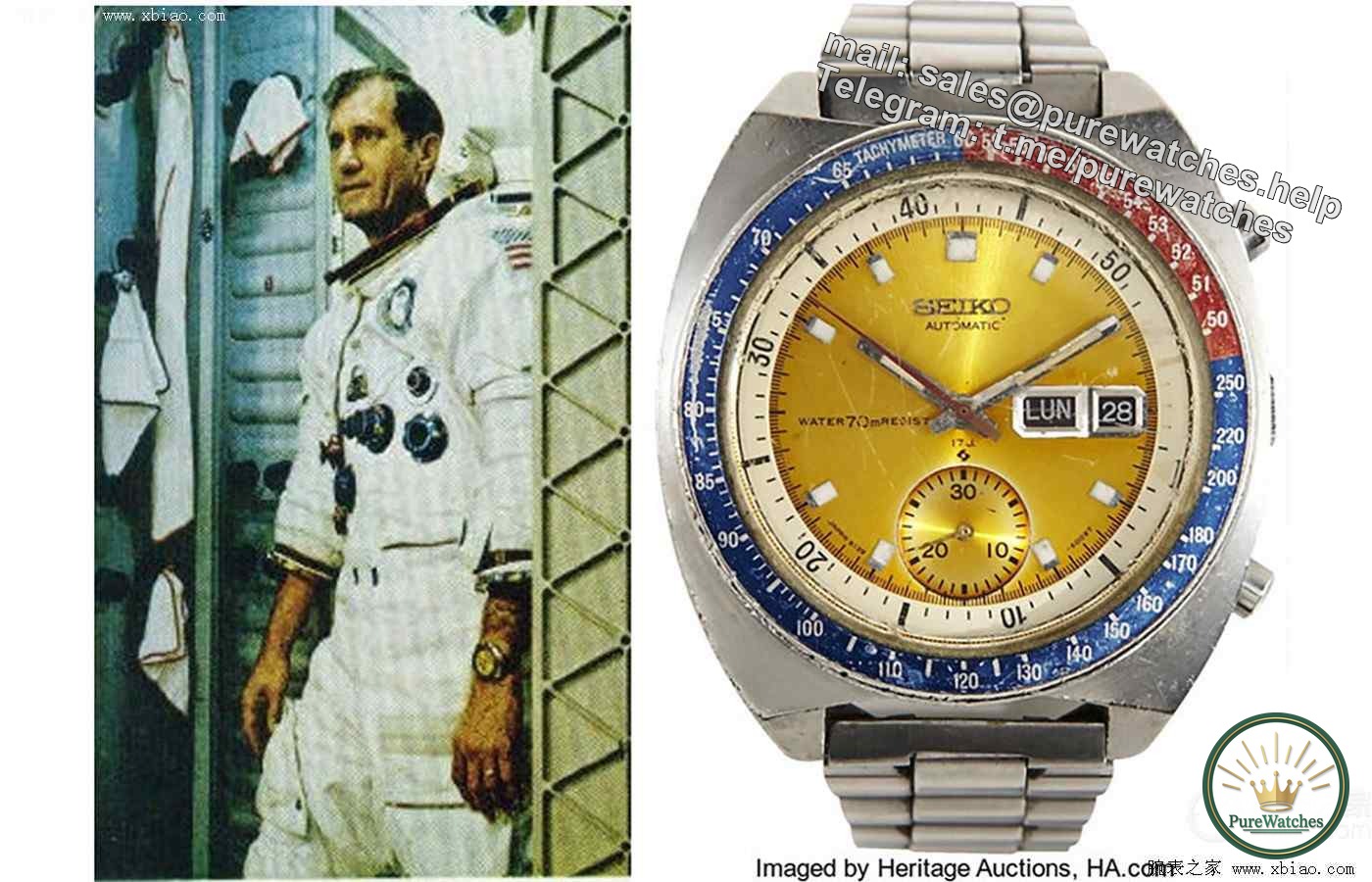
William Pogg and his Seiko Speedtimer watch
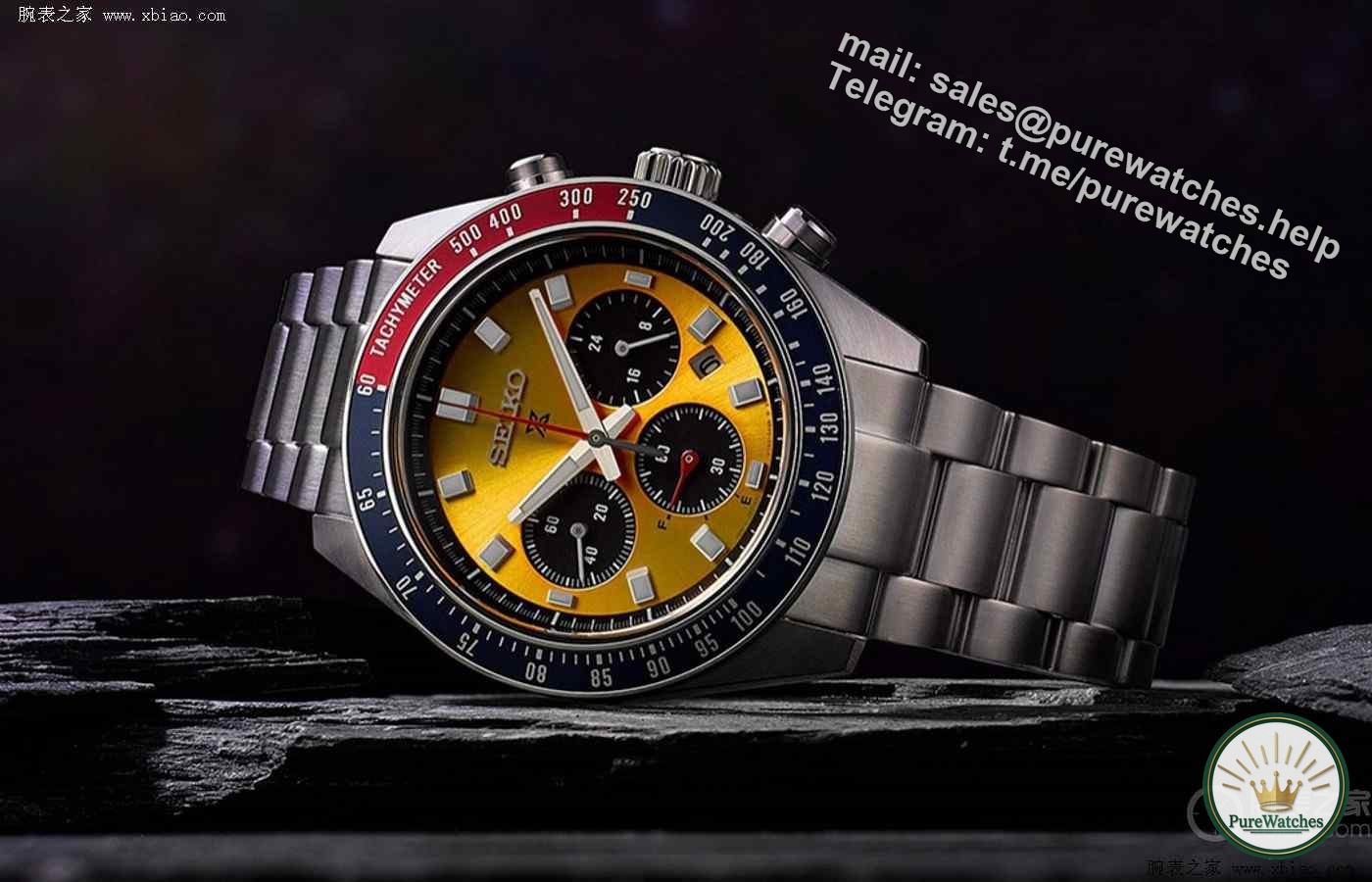
Speedtimer “Pogue” SolarChronograph1969 replica watch
Although the 6139 movement gradually withdrew from the stage of history in the 1980s, Seiko has reinterpreted this classic design with modern craftsmanship in recent years. For example, the Speedtimer “Pogue” Solar Chronograph 1969
Summary: The different fates of the three movements
These three automatic chronograph movements, born in 1969, each wrote a different chapter. Zenith El Primero continues to this day with its high vibration frequency and excellent performance, becoming the benchmark in the field of automatic chronographs; although Caliber 11 has been discontinued, its classic design has been inherited through replicas; and Seiko 6139 has promoted the popularity of automatic chronographs with its high cost performance. Regardless of the ending, they have made an indelible contribution to the development of the watchmaking industry.